n8n
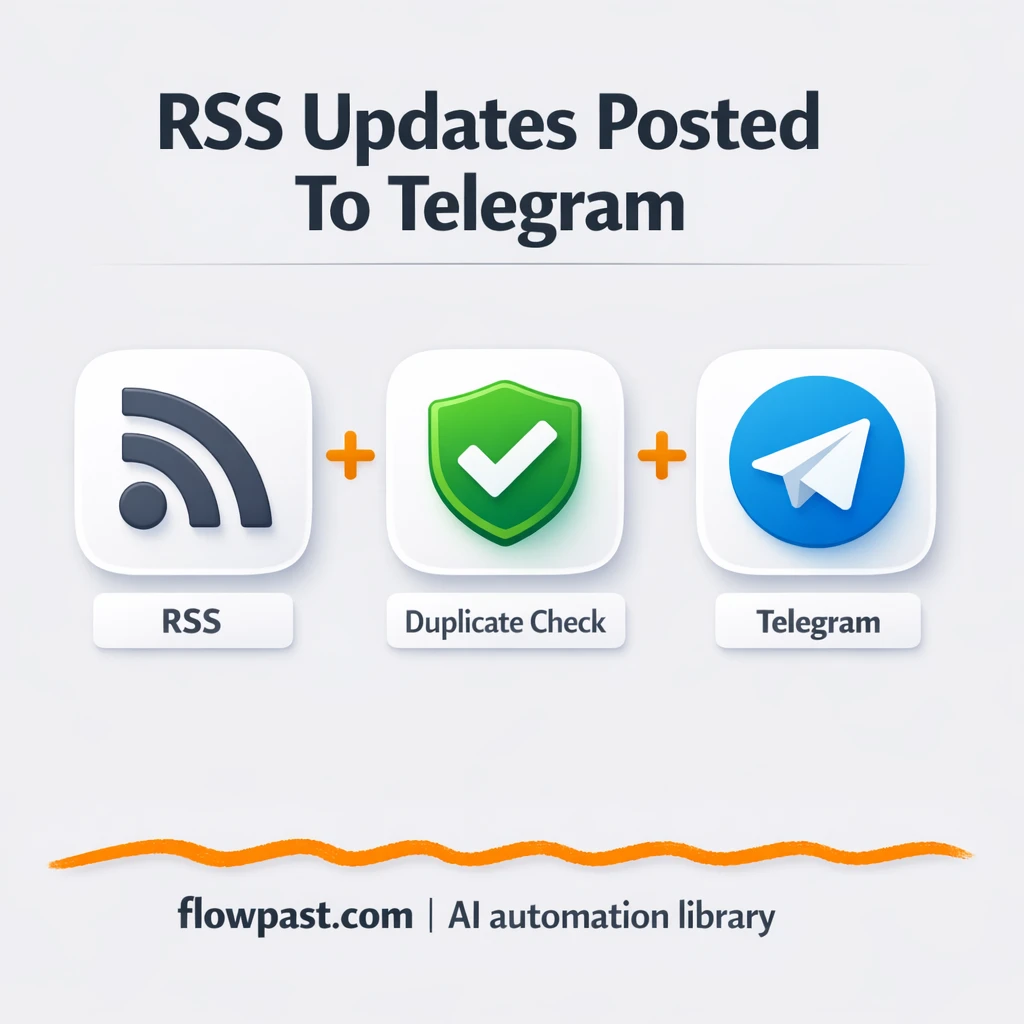
RSS + Telegram: clean posts, no duplicates
Send RSS updates to Telegram with clean text or photo posts. Avoid repeat links and…
Turn scattered data into decisions. Automate competitor tracking, news monitoring, and market research summaries—delivered to Slack, Sheets, or email so you act faster.
A workflow pulls information from sources you choose—like RSS feeds, Google Search results, web pages, or internal docs—on a schedule or when something changes. It then cleans and structures the data (remove duplicates, extract entities, tag topics). Next, AI can summarize findings, compare against prior notes, and flag what matters. Finally, it delivers insights to the tools you already use, such as Slack, email, or Google Sheets, and keeps an audit trail you can reference later.
Not really. Most Flowpast workflows are ready to run, and you’ll mainly connect accounts and pick sources. If you can follow a checklist, you can launch one.
If you currently spend about 2 hours a day scanning tabs, newsletters, and competitor sites, automation can cut that in half by handling collection, deduping, and first-pass summaries. The bigger win is consistency. You stop missing updates because you were busy. Many teams also reduce meeting prep time because the same workflow produces a daily brief and a weekly roll-up, already organized by topic, competitor, or product line.
You need an n8n instance (cloud or self-hosted), access to your target sources, and API keys for any services used (for example, OpenAI or Google Search). Some workflows use web scraping; in that case you’ll want stable URLs and, sometimes, a proxy provider. Start with one use case—like a daily competitor digest—then expand once you like the format. If you can’t share data externally, choose workflows that run inside your environment and store results in your own Sheets, database, or drive.
Join 15,000+ automation enthusiasts. Get expert tutorials, workflow templates, and pro tips delivered to your inbox every Tuesday.
No spam. Unsubscribe anytime.