

n8n
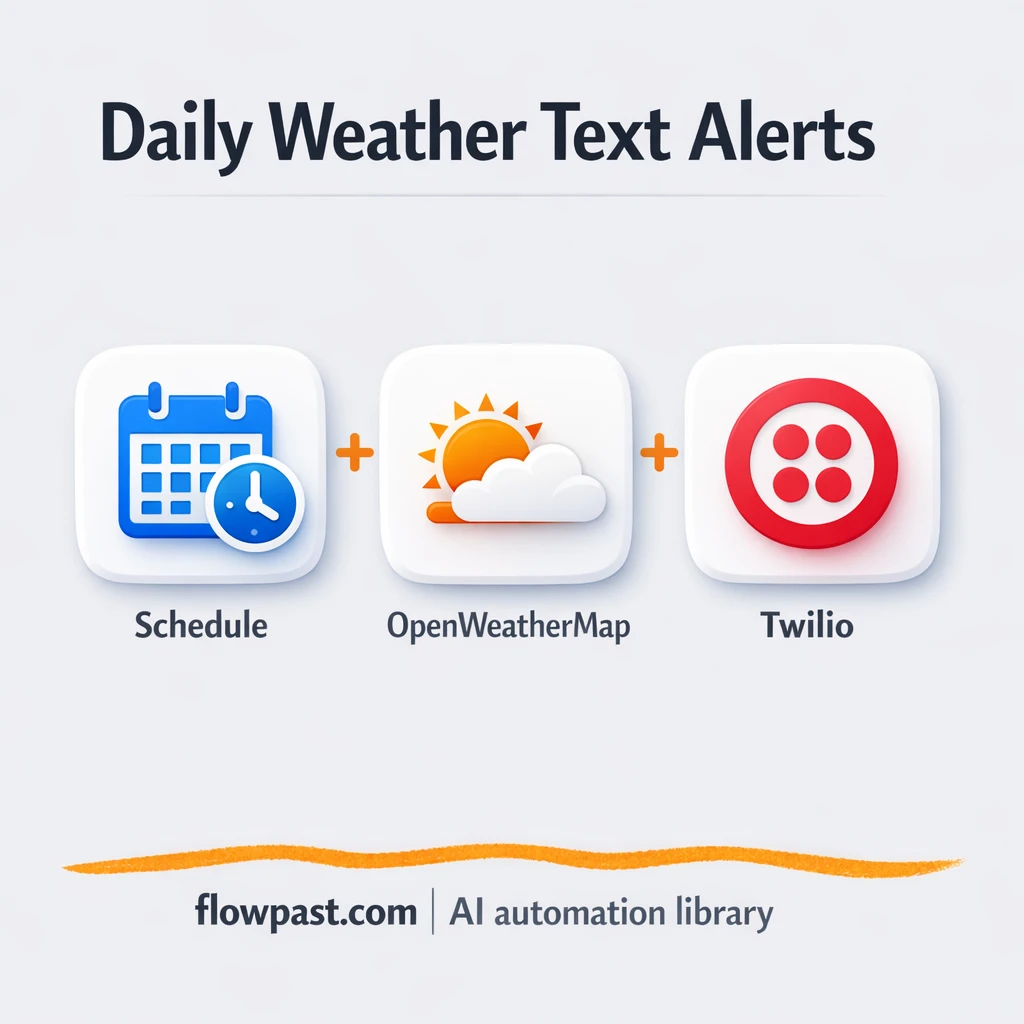
OpenWeatherMap + Twilio: sweater texts when it’s cold
Get sweater SMS alerts using OpenWeatherMap and Twilio. No more checking forecasts or second guessing.…
Turn messy data into clear decisions. Automate AI summaries, sentiment, trends, and anomaly checks across your tools—so you act faster without living in spreadsheets.
A workflow pulls data from the tools you already use (like Google Sheets, forms, email, or a webhook). It then sends that data to an AI model (often OpenAI) with a prompt that defines the output you want—summary, sentiment, categories, root cause, next steps, and so on. The workflow saves the results back to your system of record and notifies the right people in Slack or Gmail. You can also schedule it daily or trigger it in real time.
Usually, no. Most Flowpast workflows are plug-and-play: connect accounts, pick a spreadsheet/table, and adjust a prompt or two.
If you’re manually cleaning data, copying it into AI tools, and writing updates, automation can save about 2 hours per week for a small team and much more for agencies. The bigger win is consistency. You stop skipping analysis when you’re busy. You also cut context switching: insights appear where you work, like Slack or email, instead of living in yet another dashboard.
You’ll need an n8n workspace (self-hosted or cloud) and access to the apps in the workflow, like Google Sheets or Slack. For AI steps, you need an API key (OpenAI is common, but you can swap providers if the workflow supports it). Start with one data source and one output channel, keep the prompt simple, then iterate. Frankly, the first version doesn’t need to be perfect—it needs to be used.
Join 15,000+ automation enthusiasts. Get expert tutorials, workflow templates, and pro tips delivered to your inbox every Tuesday.
No spam. Unsubscribe anytime.